


A rigid gift box creates an impression before the product is touched. It can make jewellery, apparel, cosmetics, confectionery, corporate gifts or premium merchandise feel considered and valuable. Yet a box that looks luxurious in a digital mock-up can fail in production through warped board, weak corners, visible glue, colour variation, poor insert fit or damage during transport.
Brands searching for rigid gift box manufacturers need to understand how construction, material, printing, wrapping, finishing and quality checks work together. This guide explains the decisions behind a premium box so buyers can prepare a clearer brief, compare quotations fairly and reduce sampling revisions.
Quick answer: Define the product, distribution route and unboxing experience first. Select board thickness and structure for the load, choose wrapping paper that can fold cleanly, design an insert around real product tolerances, proof colour and finishes, test opening and transport, and approve a physical sample before production.
What makes a rigid box different?
A rigid or set-up box is generally built from dense paperboard that is cut and formed into a stable shell, then wrapped with printed or decorative paper. Unlike a folding carton, it is usually supplied in its formed shape unless designed as a collapsible format. The structure creates a substantial hand feel and supports premium presentation.
Common constructions include separate lid-and-base boxes, shoulder or neck boxes, book-style magnetic boxes, drawer boxes and hinged presentation cases. Each style has different tooling, assembly, storage and shipping implications.
1. Start with the product and handling route
Record product dimensions, weight, fragility, finish, orientation and permissible movement. Include accessories, manuals, chargers, ribbons or sample units. Then map the route: factory packing, warehouse stacking, courier shipment, retail display, gifting and customer reuse.
A display box that travels inside a protective shipper can prioritise presentation. A rigid box sent directly by courier needs stronger corner and surface protection. Premium appearance should not replace transport engineering.

2. Choose the right box structure
Lid and base
This classic format offers a clean reveal and can suit apparel, sweets, accessories and gifts. The lid fit must be neither loose nor vacuum-tight. Thumb notches or ribbon pulls can improve opening.
Shoulder or neck box
An internal shoulder creates alignment and a contrasting reveal. It adds components and assembly steps but can produce a precise premium effect.
Magnetic book-style box
A hinged cover supports storytelling and repeated use. Magnet placement, board scoring and closure alignment require care. Product categories and destination rules may also influence magnet handling in logistics.
Drawer box
A sleeve and tray create a controlled reveal. Provide a pull ribbon or thumb access and test friction after wrapping and under different humidity conditions.
3. Specify board thickness through testing
Board thickness should reflect box size, unsupported span, product weight, desired rigidity and converting method. Thicker is not always better; it can increase weight, cost and difficulty at folds. Large shallow boxes and tall loaded boxes behave differently.
Ask the manufacturer to recommend board grade based on a real sample and distribution test. Check flatness, edge quality and consistency. Recycled content and certification preferences should be included in the material brief, but sustainability claims must be supportable.
4. Select wrapping paper for both design and converting
Coated art paper supports detailed printing and lamination. Uncoated, textured, coloured or speciality papers create tactile value but can respond differently to ink, foil, glue and folding. Dark solid colours may reveal scuffing or edge cracks more easily than patterned designs.
Review paper grain, thickness and fold behaviour. Corners and turn-ins should lie cleanly without excessive bulk. If the paper is laminated, confirm that the finish bonds reliably and does not lift around edges.
5. Design graphics around the three-dimensional form
Rigid-box artwork must account for panels, wrapped edges, turn-ins, joints and components that cover one another. Keep logos and critical text away from fold and alignment risk. Use dielines supplied or approved by the manufacturer rather than adapting a folding-carton file.
Check barcode size, regulatory copy, country-of-origin information and product labels for the intended market. A premium layout can still be compliant and readable.

6. Choose printing and finishes with restraint
Offset printing can deliver detailed colour and consistency for suitable volumes. Digital printing may support shorter runs and prototyping. Screen printing can create dense speciality effects on certain papers. The correct method depends on substrate, artwork, quantity and finish.
Foil, embossing, debossing, spot coating, textured paper and metallic elements can add hierarchy. Using all of them together can weaken the design and complicate registration. Select one or two finishes that express the brand and remain robust through handling.
7. Engineer the insert around product tolerances
An insert presents the product, limits movement and protects delicate surfaces. Paperboard platforms, moulded pulp, corrugated fitments, fabric-covered board and foams each have different cost, appearance, sustainability and performance characteristics.
Design from maximum product dimensions, not one perfect sample. Provide finger access so customers can remove the item without shaking the box. Prevent abrasive contact, pressure on controls and collision between accessories. If the box will be reused, make the insert removable only when that supports the intended experience.
8. Plan hinges, magnets, ribbons and accessories
Every added component introduces alignment and procurement risk. Test ribbon length and fraying, magnet polarity and holding force, metal accessories, elastic loops and paper hinges. Adhesives must suit the materials and storage conditions.
Ask whether accessories can be replaced with paper-based alternatives when sustainability and recycling are priorities. A simpler construction may produce a more credible environmental benefit than a decorative recycling symbol.
9. Control colour across production
Colour can vary with paper shade, ink, coating, lamination and viewing light. Define brand colours using an approved reference and understand the difference between process printing and spot-colour matching. Approve a physical proof or press standard for critical work.
For repeat orders, retain artwork versions, colour references, paper specifications and finish samples. Do not compare a new production run only with a screen image.
10. Test the unboxing experience
Open the sample as a customer would. Is the lid difficult? Does the drawer jam? Is the product easy to lift? Do ribbons cover branding? Does the insert remain seated when the box is tilted? Can the box be opened repeatedly without tearing or delamination?
Then test packing speed. A beautiful format that slows the line, traps dust or requires repeated adjustment may be unsuitable for production volume.
11. Validate transport and storage
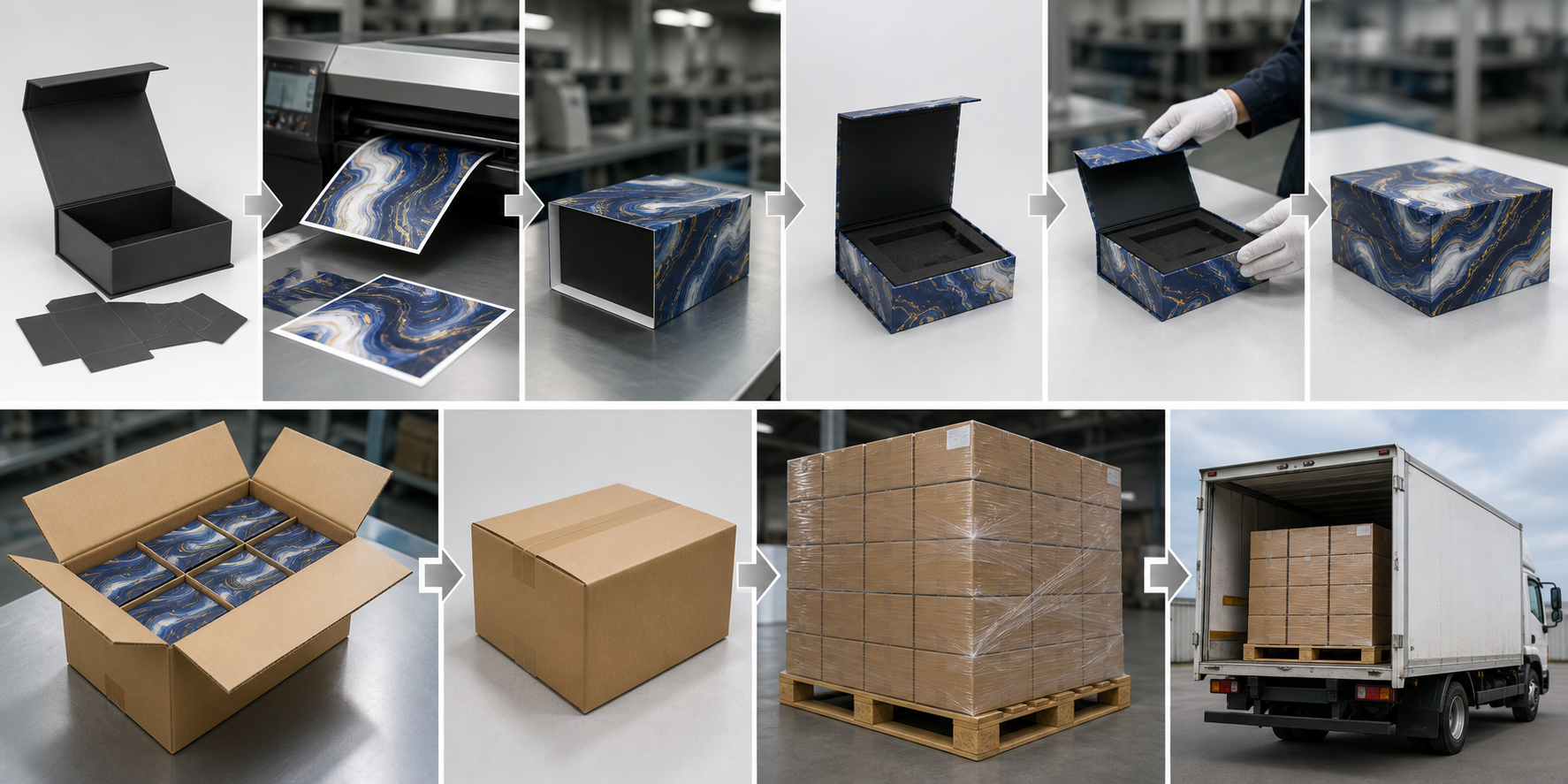
Rigid boxes consume space and need protection from crushing, moisture, abrasion and dust. Define inner wrapping, master cartons, dividers, pallet pattern and stacking height. Simulate courier drops or compression according to the distribution risk. Review dimensional weight as well as product weight.
Humidity can influence paper, adhesive and fit. Storage conditions in Karur, Chennai or another warm region may differ from an air-conditioned showroom. Packaging should be evaluated in realistic conditions.
12. Build a measurable quality plan
• Approved dimensions and tolerance
• Board, wrapping paper and insert specifications
• Colour standard and acceptable variation
• Corner, joint, wrap and turn-in workmanship
• Logo and foil registration
• Magnet, ribbon and closure function
• Surface cleanliness, scratches and glue marks
• Insert fit and product-removal test
• Master-carton packing and transport checks
Agree the sampling method and defect classifications before production. Clear acceptance criteria protect both brand and manufacturer.
How to prepare a rigid-box request for quotation
Provide final product dimensions and weight, preferred structure, internal box size, estimated quantity, artwork status, board and paper preference, print colours, finishes, insert material, accessories, target delivery, packing requirements and destination. State whether the quotation should include prototypes, tooling, freight and taxes.
Ask suppliers to identify assumptions and alternatives. A lower quotation may use a different board, paper, insert or packing method, making direct comparison misleading.
Plan sampling and production approval
Use stages. A white sample confirms structure and fit before money is spent on final printing and finishes. A printed prototype checks colour, artwork placement and material behaviour. A pre-production sample establishes the standard for the run. Mark every approval with version, date and authorised sign-off so an old artwork file cannot return accidentally.
During production, retain representative samples from the beginning, middle and end of the run. When delivery reaches the brand, inspect cartons before releasing the entire lot to packing. Early detection of colour, adhesion or size variation protects launch schedules and gives the manufacturer evidence for corrective action.
Frequently asked questions
Are rigid boxes suitable for e-commerce shipping?
They can be, but usually need an engineered outer shipper and protective packing. The presentation box alone may not resist courier hazards.
What is the best rigid-box style?
The best style depends on product, budget, unboxing sequence, storage and quantity. A simple lid-and-base box can feel more premium than an overcomplicated structure when materials and fit are excellent.
Can rigid boxes be sustainable?
Design for right-sized material, credible fibre sourcing, reduced mixed components, reuse and recyclability. Environmental claims should match the complete construction and available evidence.
Why is a physical sample essential?
It reveals fit, colour, opening force, finish registration and packing behaviour that a digital render cannot prove.
Premium packaging begins with disciplined engineering
A rigid gift box should make the product feel valuable while remaining manufacturable, packable and durable. The strongest results come from an accurate brief, prototype testing and defined quality criteria—not decorative finishes alone.
EAGLE PRINT CARE provides custom printing and packaging in Karur, including rigid gift boxes, paperboard packaging, textile boxes, hang tags, paper hangers and cartons. Brands can involve the production team early to align structure, print, finishing and delivery requirements.