
Karur is known for bedsheets, towels, table linen, kitchen linen, cushion covers, curtains and many other home textile products. Considerable care goes into the cloth, colour, stitching and finish—but the package is often the first part the buyer sees.
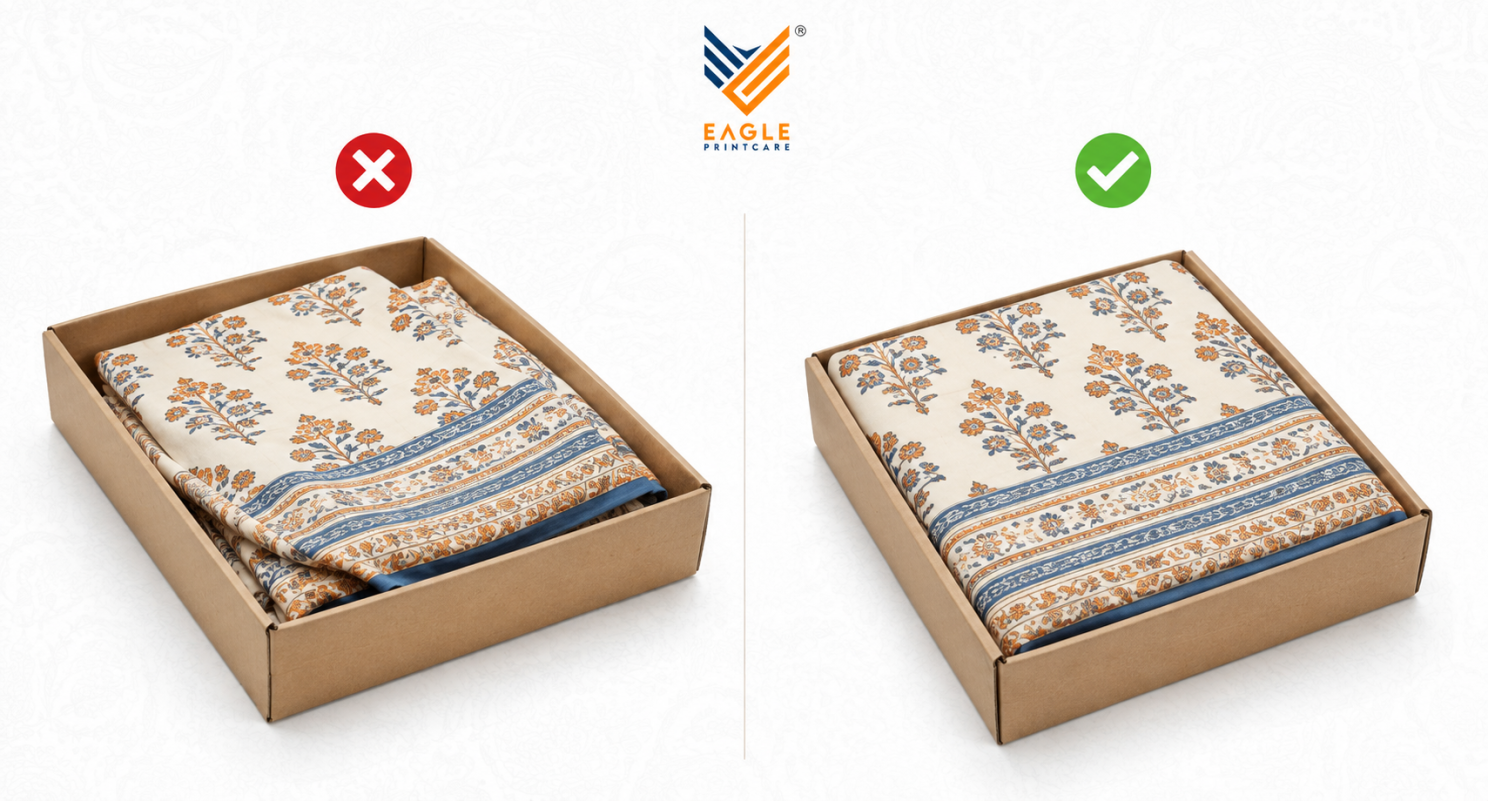
Imagine a beautifully finished bedsheet set placed inside a weak, oversized box. The fabric may be excellent, but bent corners and a loose fit can make the product feel less valuable. Choosing the right home textile packaging is therefore an important business decision.
A good box should: fit the product correctly, protect it during storage and travel, communicate the brand clearly, make packing easier and suit the way the product will be sold.
Why good packaging matters for a home textile business
Home textiles are soft, but their packaging has a demanding job. The box must keep the item clean, hold its fold, carry its weight and remain presentable after storage and travel. It should also display useful information such as product size, set contents, care details and brand name.
Good packaging can also improve work inside the production unit. A structure that is simple to fold, fill, close, stack and count can save packing time. Clear labels reduce mix-ups between colours, sizes and product ranges.
Consider two similar bedsheet sets on the same shelf. One is packed in a plain box with unclear details. The other is presented in a clean, custom printed box with the brand name, bedsheet size, product image and set information. The well-organised pack is more likely to look reliable and attract attention.
1. Check the product size, fold and fit
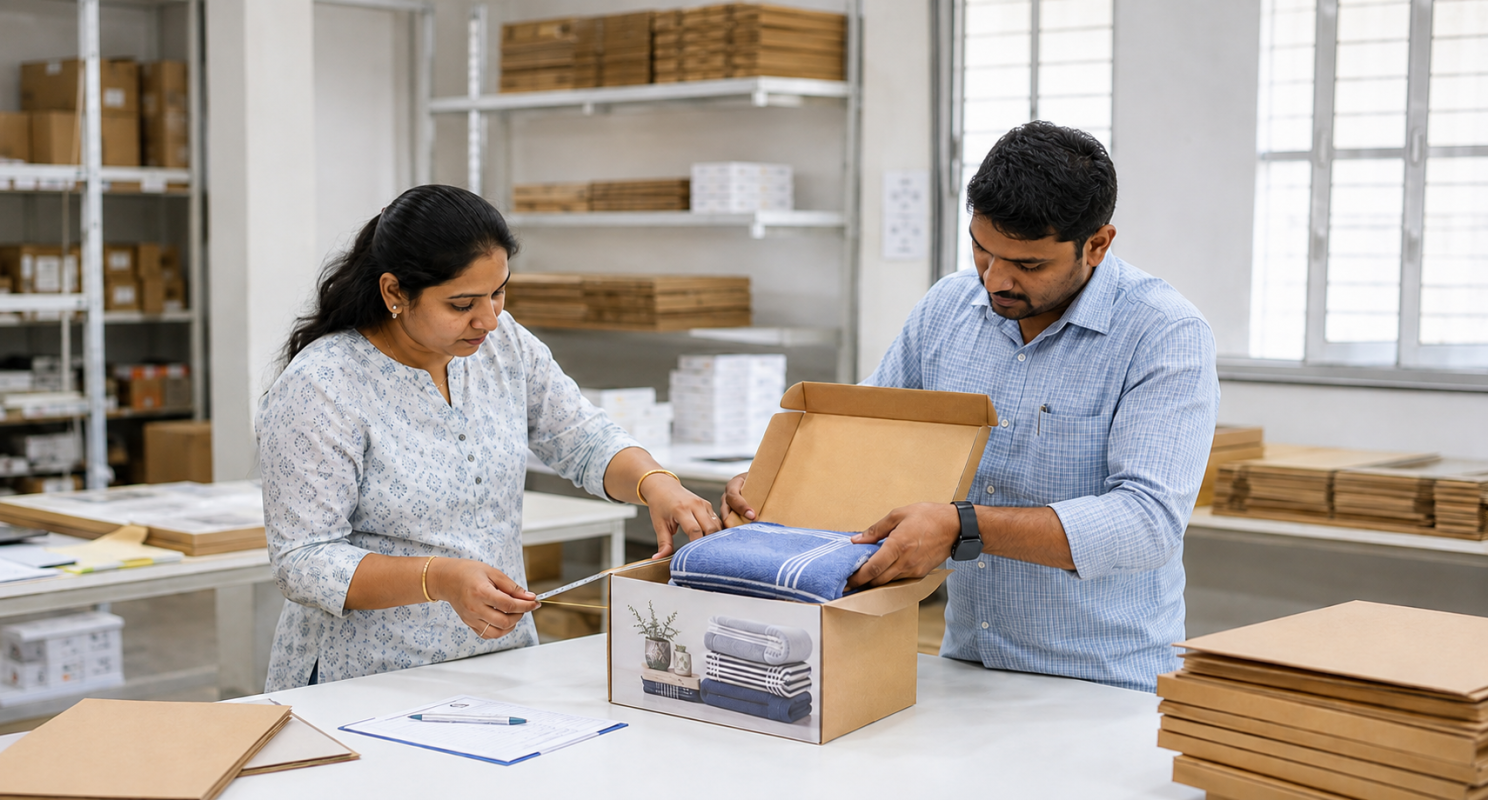
Do not choose a box size by guesswork. Measure the textile after folding it exactly as it will be packed. Record:
- Final folded length, width and height.
- Packed weight.
- Number of pieces in the set.
- Space required for an inner cover, tag, ribbon, tissue or insert.
A tight box can press the product and push the lid open. An oversized box allows movement, makes the pack look empty and increases board, storage and transport costs.
For example, one box may be used for both a single bedsheet and a larger family set. The smaller set slides inside, while the larger set bends the lid. Two correctly planned box sizes—or a suitable insert for the smaller pack—will create a cleaner result.
Whenever possible, give the packaging company a real folded product sample. It helps the team plan a custom cardboard box around the actual fit.

2. Check the cardboard strength for the job
Not every textile product needs the same type of cardboard. A light towel set kept on a retail shelf has different needs from a heavy bedsheet combination sent by courier.
Tell your packaging supplier about the packed product weight, stacking height, storage period, travel distance, retail or shipping use and whether an outer transport carton will be used.
A printed retail carton may hold and present the product, while a stronger corrugated carton may be required outside it for shipping. Terms such as ply, board thickness and paper quality describe different performance factors. Explain how the box will be used and ask the packaging team to recommend a suitable specification.
Do not compare prices without comparing materials. A small saving on a weak box can become a larger loss when packs arrive crushed, bent or open.
3. Check printing, brand colours and product details
Your box can carry your brand from Karur to a shop, hotel, online buyer, business customer or export market. The logo should be clear, and printed colours should match the brand as closely as the selected board and print process allow.
Confirm that the approved artwork contains the correct:
- Brand name and logo.
- Product name, fabric details and size.
- Number of pieces and care information.
- Contact details.
- Barcode and buyer-label space.
Keep the front of the box easy to read. Too many words, colours and pictures can make even a premium product look crowded. Review every panel carefully and ask another team member to check spelling, phone numbers, sizes and other details before approval.
Colours displayed on a phone or computer may look different when printed on cardboard. When colour is important, discuss a proof or printed sample before full production.
4. Check whether the box is easy to pack and open
A creative box must also be practical. The packing team should be able to form, fill, close, store and move it without wasting time. The customer should be able to open it without damaging the textile.
- A window box can show the colour or texture of a towel set.
- A sleeve can give table linen a clean, premium presentation.
- A handle may help customers carry a larger bedsheet or gift pack.
- A simple folding carton may be sufficient for a regular retail product.
Before confirming a structure, check whether it stays closed after filling, stands neatly on a shelf, provides barcode space, opens easily, preserves strength around windows, assembles quickly and avoids unnecessary tape or manual work.
The best custom packaging is not the box with the most decoration. It is the box that suits the product, buyer, budget and packing process.
5. Check protection during storage and transport
Home textile packaging must keep the product neat from the packing table to the buyer. During that journey, boxes may be stacked, shifted, loaded, unloaded, transported and stored.
For white towels or light-coloured fabrics, an inner cover can help keep the textile clean. For online or long-distance orders, the printed retail box may need a stronger outer shipping carton. Store cardboard boxes away from wet floors and damp walls.
A table-linen gift set may arrive with the textile intact but rough, crushed display-box corners if it is shipped without adequate outer protection. Planning the retail pack and shipping pack together can reduce this risk.
Good protection comes from the correct box size, appropriate board strength, firm joining, clean cutting and folding, suitable stacking and the right inner and outer packing. The aim is not automatically to use the heaviest board; it is to match performance to the actual journey.
6. Check a sample before full production
A sample can reveal problems that are easy to miss on a screen. Place the real product inside the sample. Close it, open it, lift it, stack it and assess it as a customer would.
- Product fit and final box shape.
- Corners, folds and joining quality.
- Window position and print placement.
- Opening and closing performance.
- Logo, product details and label areas.
- Handle strength at the full packed weight, where applicable.
Give the sample to a team member who was not involved in the design discussion and ask that person to pack and open it without instructions. Their experience can reveal small usability problems quickly.
Sample approval adds one early step, but can prevent costly mistakes after cardboard-box printing begins. Keep the final size, material, artwork and approval in writing.
7. Check the full quotation, quantity and delivery plan
When comparing packaging quotations, make sure every company is quoting for the same box. Price changes with the box dimensions, cardboard material, print colours and coverage, structure, window or handle, surface finish, order quantity and transport requirement.
Confirm what the quotation includes: number of boxes, sample or setup cost, printing, cutting, joining, finishing, tax, packing and transport. Note any separately charged item before approving the order.
Custom packaging requires time for artwork, approval, material planning, printing, cutting and finishing. If boxes are required for a festival sale, buyer visit, exhibition, export dispatch or product launch, share the delivery date early and allow time to pack the textiles after the boxes arrive.
For repeat orders, refer to the previously approved size, material and artwork. Clearly identify every new change so the correct version is produced and the range maintains a consistent appearance.
Packaging ideas for different home textile products
Bedsheet sets
Use a fitted printed carton with the bed size and number of pieces easy to find. A larger set may benefit from a handle, while products sent by courier may need an outer corrugated carton.
Towel sets
A small window can show colour and texture. Ensure the window does not expose too much fabric to dust or reduce the box’s strength.
Kitchen linen
A compact carton, sleeve or house-shaped gift pack can organise aprons, gloves and kitchen towels. Show the number of pieces clearly.
Table linen
A divider or organised fold can keep napkins, runners and placemats neat. Colour coding can help buyers identify different set sizes.
Cushion covers and curtains
Match the box to the folded thickness. Clear size and quantity details reduce mix-ups in shops, warehouses and online packing areas.
How Eagle Print Care supports custom packaging in Karur
Eagle Print Care provides custom cardboard printing and packaging solutions for home textile businesses and other product-based companies in and around Karur. The package is planned around the actual product, brand, selling method and order requirement.
This approach supports bedsheet manufacturers, towel and bath-linen units, table-linen brands, kitchen-linen businesses, cushion-cover and curtain sellers, home-textile exporters, wholesalers, retailers and new brands.
The discussion can begin with a product sample or clear measurements. Eagle Print Care can review the folded size, packed weight, box purpose, printing requirements, quantity and delivery date before planning the box size, board option, structure and artwork.
A simple custom packaging order process
1. Share the product details
Provide the folded dimensions, packed weight, number of pieces, quantity and a product sample where available.
2. Explain how the box will be used
Clarify whether the box is for retail, gifting, wholesale supply, courier delivery, export packing or multiple uses.
3. Select the box plan
Choose a suitable size, cardboard type, opening style, print area and useful structural features.
4. Check the artwork
Review the logo, colours, product information, care notes, contact details and label space.
5. Review the sample or proof
Test product fit and approve every important detail before production.
6. Production and quality control
Check printing, cutting, folding, joining, finish and final quantity.
7. Delivery and repeat-order planning
Confirm delivery and retain the approved box specification for future orders.
Frequently asked questions
What is the best box for bedsheets or towels?
There is no single best box for every product. The right choice depends on folded size, weight, display need, selling price and delivery method. A printed carton may suit a light retail pack, while a stronger outer corrugated carton may be needed for shipping.
Can I get a custom size and custom printing?
Yes. Packaging can be planned around the product dimensions, box style, logo, brand colours and required product information. A real folded sample helps the team understand the required fit.
Is there a minimum order quantity?
The suitable quantity depends on box size, material, printing method and design. Share the required quantity and whether it is a trial or repeat order so an appropriate option can be discussed.
What should I send when requesting a quotation?
Provide final folded dimensions, packed weight, number of pieces, box quantity, preferred structure, printing requirements, delivery location and required date. Include a product photo or sample when possible.
Can one box be used for retail and courier delivery?
Sometimes, but an attractive retail box often needs a stronger outer carton for courier handling so it reaches the customer with fewer marks and crushed corners.
How long does a custom packaging order take?
Timing depends on artwork, sample approval, material, box style, quantity and the current production schedule. Share the deadline early and confirm the delivery date after final approval.
Final checklist before you order
- The box fits the folded product correctly.
- The cardboard strength matches the product and transport needs.
- The printing is clear and appropriate for the brand.
- The box is easy to pack, close, open, store and move.
- The product has enough protection during storage and delivery.
- The sample and final box details have been checked.
- The quantity, total cost and delivery date are confirmed.
When evaluating home textile packaging in Karur, do not judge a box only by its price or appearance. Correct fit, board strength, printing, usability, protection, sampling and complete order information help avoid waste, packing difficulties, print mistakes and delivery problems.